


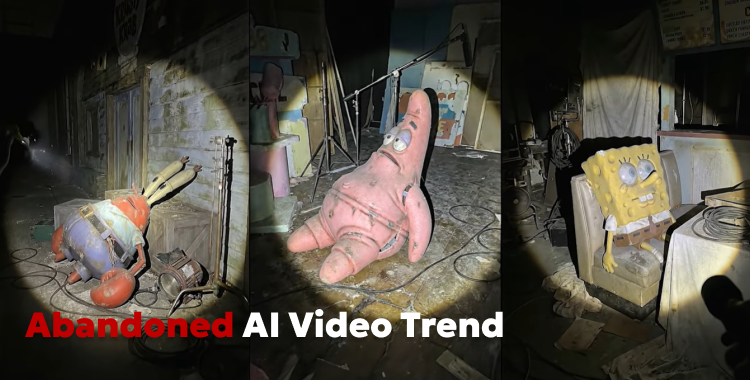
Abandoned AI videos are quickly becoming one of the most watched visual trends online, especially on short-form platforms. These clips often place familiar movie characters inside dusty, forgotten locations like abandoned film sets or empty hospitals, creating scenes that feel strangely real. The mix of realism and mystery makes people stop scrolling and watch longer, which is why abandoned AI videos on TikTok and instagram continue to spread so fast. In this tutorial you will learn how to make abandoned AI videos easily, and you can copy the prompts directly to generate video on Open Art.
Table of Contents
Part 1. How to Create Abandoned AI Videos in Minutes
Creating abandoned AI videos does not require advanced editing skills. With the right tools, you can go from an idea to a finished video in just a few minutes.
Step 1: Use Abandoned Movie Scene Generator in GPT
First, go to the GPT Explore page and search for the model called "Abandoned Movies Scenes." Open the model and start a new chat. This tool is designed to turn familiar movies into abandoned-style cinematic scenes.
Step 2: Enter a Movie Name and Generate Prompts
In the chat box, simply type the name of the movie or animated film you want to transform. For example, you can use titles like Kung Fu Panda, SpongeBob SquarePants, or Cars. The model will automatically generate five abandoned-style prompts based on your input. Choose one prompt that fits your idea and copy it.

Step 3: Generate Images in OpenArt
Next, open the OpenArt website. From the left sidebar, click Image, then select Create Images. Change the model to Nanobanana Pro, paste the prompt you copied earlier, and set the image aspect ratio to 9:6. Select the option to generate four images. This gives you multiple visual variations to work with.


Step 4: Turn Images into Video
Once the images are ready, switch to the Video tab in the top navigation bar. Choose Google Veo 3.1 as the video model. Paste the video prompt provided below into the prompt box, then click generate. The system will convert your abandoned scene into a short cinematic AI video.


Here are Google Veo 3.1 Prompts:
| Theme | Prompts | Copy Now |
| First-Person Found Footage Camera Rules |
Camera is a real human first-person viewpoint walking slowly in the same location, presented as a single continuous shot with no cuts, transitions, or time jumps.
Movement is grounded and natural: subtle vertical footstep bob, gentle side-to-side sway, natural head movement only, camera height fixed at average human eye level. No floating, no stabilization, no acceleration or stopping—slow, consistent walking pace throughout.
The viewer holds a flashlight; the beam reacts naturally with delayed motion, small overcorrections, uneven and imperfect scanning. Light occasionally hesitates or overshoots as a real handheld flashlight would.
The character remains completely lifeless at all times—no blinking, breathing, facial micro-movements, muscle tension, or implied consciousness. Absolutely no movement from the character under any circumstances.
Only environmental motion is allowed: floating dust particles, slight light flicker, minimal loose elements reacting subtly to air or movement. No other motion.
The environment stays fully consistent throughout: no set changes, teleporting, scene shifts, or new objects appearing.
Photorealistic found-footage realism. Low-light conditions with strong shadows, gritty worn textures, slight motion blur during steps, low-light digital noise, imperfect focus breathing, and natural visual imperfections. No cinematic framing, no dramatic camera movements—purely observational footage. The stillness feels unnatural and unsettling despite the lack of movement.
|
COPY
|
Part 2. Best 20 Abandoned AI Video Trend Prompts
Below are the most popular Abandoned AI video trends right now, featuring iconic IPs such as Kung Fu Panda, SpongeBob SquarePants, Monsters, Inc., and many more. All of these prompts have been fully tested and proven to generate the highest-quality, ultra-realistic images. Simply click to copy a prompt and paste it directly into OpenArt to generate your images instantly. Turn them into videos and share them on Instagram, TikTok, and other social platforms to ride the trend and capture massive attention.
1. Kung Fu Panda Abandoned AI Video Trend Prompts

| Theme | Prompts | Copy Now |
| Po from Kung Fu Panda |
Po from Kung Fu Panda appears as a massive, lifeless animatronic panda slumped against a crumbling training hall set, revealed only by the viewer’s handheld flashlight casting a single circular beam into the surrounding darkness. The uploaded image is used as the exact visual reference—his black-and-white fur textures, rounded proportions, facial structure, and fabric materials are preserved without stylization—now matted with dust, oil stains, and patches of discoloration. His kung fu pants are stiff with grime, seams frayed and torn, with faint rusted joints visible beneath the fabric. He is completely inactive, no pose or expression, like a forgotten prop. The floor is coated in dust, scattered with coiled cables, broken light stands, and abandoned camera rigs, while faded temple set pieces loom behind him. Shot from a low, handheld cinematic angle, the flashlight beam creates harsh shadows and deep contrast, ultra-realistic and photorealistic.
|
COPY
|
| Tigress from Kung Fu Panda |
Tigress from Kung Fu Panda stands rigid and motionless as an abandoned animatronic figure, her form partially obscured by darkness except where the viewer’s flashlight beam cuts across her face and torso. The uploaded image is the exact reference—preserving her orange-and-black fur pattern, athletic proportions, and facial features—now dulled by heavy dust buildup, grime streaks, and worn fabric wraps around her arms and legs. The animatronic body shows no life or intent, joints stiff and locked, with subtle cracks and exposed mechanical seams. Around her, the derelict set is littered with old boom mics, tangled cables, and faded training props, all coated in dust. The cinematic camera angle is slightly tilted, emphasizing abandonment, with stark flashlight-only lighting and deep shadows for a hyper-realistic, cinematic feel.
|
COPY
|
| Master Shifu from Kung Fu Panda |
Master Shifu from Kung Fu Panda is depicted as a small, lifeless animatronic prop collapsed beside a decaying jade palace set, illuminated solely by the viewer’s circular flashlight beam while everything else fades into black. The uploaded image is used as an exact visual reference—his fur color, facial structure, robe textures, and proportions remain unchanged—now visibly aged with discoloration, frayed edges, and dust packed into every crease. His glassy eyes stare blankly forward, completely inactive, with no hint of emotion or motion. The surrounding floor is cluttered with obsolete film equipment, cracked set walls, loose cables, and fallen lantern props, all thick with dust. Captured from a close, downward cinematic angle, the scene is ultra-realistic, photorealistic, and eerily still.
|
COPY
|
| Tai Lung from Kung Fu Panda |
Tai Lung from Kung Fu Panda appears as a towering, inert animatronic snow leopard chained to a ruined prison set, revealed only where the viewer’s flashlight beam strikes his scarred, plastic-fur face and broad chest. The uploaded image is the exact reference—retaining his muscular proportions, fur coloration, facial features, and armor details—now marred by grime, rust stains, torn straps, and deep scratches across his surface. He is completely lifeless, no aggression or pose, merely a discarded prop with stiff limbs and exposed mechanical joints. Dust blankets the floor, where broken shackles, cables, and abandoned dolly tracks lie tangled among faded rock set pieces. Shot from a dramatic low-angle POV with harsh flashlight lighting, the scene feels cinematic, ultra-realistic, and hauntingly abandoned.
|
COPY
|
| Master Oogway from Kung Fu Panda |
Master Oogway from Kung Fu Panda is shown as a motionless animatronic tortoise resting against a deteriorating peach tree set, barely visible except for the viewer’s flashlight beam forming a circular pool of light. The uploaded image is used as the exact visual reference—his shell texture, aged facial features, robe fabric, and muted colors are preserved—now layered with dust, cracks, stains, and subtle moss-like discoloration. His body is entirely inactive, head tilted slightly forward as a forgotten prop rather than a living being. Surrounding him are dusty floors, fallen fake petals, old lighting rigs, coiled cables, and faded backdrop panels. The cinematic camera angle is slow and reverent, with flashlight-only illumination and deep shadow, rendered in ultra-realistic, photorealistic cinematic quality.
|
COPY
|
2. SpongeBob SquarePants Abandoned AI Video Trend Prompts
| Theme | Prompts | Copy Now |
| SpongeBob SquarePants |
SpongeBob SquarePants from SpongeBob SquarePants appears as a lifeless, boxy animatronic prop slumped against a deteriorating Bikini Bottom interior set, revealed only by the viewer holding a flashlight that casts a single circular beam while everything else disappears into darkness. The uploaded image is used as the exact visual reference—his bright yellow porous texture, square proportions, facial features, white shirt, red tie, and brown shorts are preserved precisely, now faded, stained, and stiff with age. His sponge surface is cracked and discolored, pores clogged with dust and grime, seams splitting at the edges with hints of internal mechanics visible. He shows no pose or emotion, completely inactive. The floor is layered with dust, scattered with old underwater-themed set pieces, tangled cables, rusted light stands, and abandoned camera equipment. Shot from a low, handheld cinematic angle, flashlight-only lighting creates harsh shadows and an ultra-realistic, photorealistic sense of abandonment.
|
COPY
|
| Patrick Star |
Patrick Star from SpongeBob SquarePants lies motionless as a faded animatronic starfish prop on a collapsed rock set, illuminated solely by the viewer’s flashlight beam cutting through surrounding darkness. The uploaded image is the exact reference—his pink skin tone, rounded proportions, facial structure, and green floral shorts remain unchanged—now dulled by dust, stains, and uneven discoloration. His rubbery surface is cracked and peeling, with torn seams and stiff joints exposing corroded internal components. Patrick is completely lifeless, no expression or movement. Around him, the dusty set floor is cluttered with old filming equipment, loose cables, broken prop coral, and faded backdrop panels. Captured from an overhead cinematic angle, the scene feels hyper-realistic, eerie, and frozen in time.
|
COPY
|
| Squidward Tentacles |
Squidward Tentacles from SpongeBob SquarePants stands rigid and inactive as a tall animatronic figure beside a decaying Krusty Krab interior set, revealed only where the viewer’s flashlight forms a circular pool of light. The uploaded image is used as the exact visual reference—his pale blue-green skin, elongated head, drooping facial features, and brown polo shirt are preserved exactly—now coated in dust, grime streaks, and fabric wear. Fine cracks run along his stiff limbs, with rusted joints faintly visible beneath the surface. He displays no emotion or pose, resembling a forgotten museum prop. The environment is filled with dusty floors, abandoned boom mics, tangled cables, overturned stools, and obsolete camera rigs. Shot from a slightly tilted cinematic angle, flashlight-only illumination creates deep shadows and an ultra-realistic, photorealistic atmosphere.
|
COPY
|
| Mr. Krabs |
Mr. Krabs from SpongeBob SquarePants appears as a bulky, inert animatronic crab propped behind a crumbling cashier counter set, exposed only by the viewer’s handheld flashlight beam. The uploaded image is the exact reference—his red shell texture, large claws, eyestalks, blue shirt, and belt are preserved without redesign—now heavily scratched, dulled, and stained with rust-like discoloration. His shell shows chipped edges and seam lines, joints locked in place, completely lifeless. The surrounding set is coated in dust, with scattered coins, old register props, coiled cables, and abandoned lighting equipment littering the floor. Captured from a low, front-facing cinematic POV, the lighting is stark and directional, creating a hyper-realistic, abandoned-film-set mood.
|
COPY
|
| Sandy Cheeks |
Sandy Cheeks from SpongeBob SquarePants is shown as a rigid, lifeless animatronic squirrel collapsed inside a deteriorating treedome set, barely visible except for the viewer’s flashlight beam piercing the darkness. The uploaded image is used as the exact visual reference—her brown fur texture, facial features, astronaut suit, helmet, and flower emblem are preserved exactly—now clouded with dust, scratches, fabric fraying, and yellowed plastic. Her suit joints are stiff and corroded, with exposed mechanical seams, no movement or expression remaining. The environment includes dusty floors, fallen fake plants, old oxygen-tank props, tangled cables, and abandoned camera dollies. Shot from a close, handheld cinematic angle with flashlight-only lighting, the scene is ultra-realistic, photorealistic, and hauntingly still.
|
COPY
|
3. Toy Story Abandoned AI Video Trend Prompts
| Theme | Prompts | Copy Now |
| Woody |
Woody from Toy Story appears as a lifeless animatronic cowboy doll slumped against a decaying child’s bedroom movie set, revealed only by the viewer holding a flashlight that casts a single circular beam while everything else fades into darkness. The uploaded image is used as the exact visual reference—his cloth face, stitched smile, painted eyes, brown hat, yellow plaid shirt, cowhide vest, red bandana, blue jeans, and sheriff badge are preserved precisely, now faded, dust-caked, and stained. His fabric is worn thin at the seams, with discoloration and grime embedded into the fibers, and stiff joints hinting at internal mechanisms beneath the clothing. He shows no pose, no emotion, completely inactive like a discarded prop. The dusty floor is littered with old film lights, tangled cables, overturned toy props, and a forgotten camera dolly. Captured from a low, handheld cinematic angle with flashlight-only lighting, the scene is ultra-realistic and photorealistic.
|
COPY
|
| Buzz Lightyear |
Buzz Lightyear from Toy Story stands rigid and motionless as an abandoned animatronic space ranger prop, partially illuminated by the viewer’s circular flashlight beam cutting through surrounding darkness on a deteriorating sci-fi bedroom set. The uploaded image is the exact reference—his white, green, and purple suit, helmet dome, chest decals, wing pack, and facial features remain unchanged—now scratched, yellowed, and dulled with heavy dust buildup. Plastic surfaces show cracks and scuffs, with rust-stained joints and exposed seams at the elbows and neck. Buzz displays no heroism or stance, completely lifeless. Around him lie dusty floors, broken star-shaped set pieces, old lighting rigs, coiled cables, and abandoned camera equipment. Shot from a dramatic low-angle POV, the flashlight creates stark highlights and deep shadows, ultra-realistic and cinematic.
|
COPY
|
| Jessie |
Jessie from Toy Story is shown as a collapsed, lifeless animatronic cowgirl prop resting against a faded Western playset backdrop, visible only where the viewer’s flashlight forms a tight circular pool of light. The uploaded image is used as the exact visual reference—her red braided yarn hair, pale cloth face, cowgirl hat, white shirt with yellow accents, blue jeans, and chaps are preserved exactly—now frayed, discolored, and coated in dust. Her fabric limbs are stiff and bent unnaturally, seams splitting to reveal internal supports. She shows no expression or motion, completely inactive. The environment is filled with dusty floors, old boom mics, tangled cables, collapsed prop fencing, and faded painted scenery. Captured from a close, slightly tilted cinematic angle, the flashlight-only lighting gives the scene a photorealistic, abandoned-film-set atmosphere.
|
COPY
|
| Mr. Potato Head |
Mr. Potato Head from Toy Story appears as a dismantled, lifeless animatronic prop seated on a dusty studio floor, illuminated solely by the viewer’s flashlight beam while the rest of the set disappears into darkness. The uploaded image is the exact reference—his brown plastic body, removable eyes, nose, mouth, ears, hat, and shoes are preserved in shape and color—now scuffed, scratched, and stained with grime. Several facial pieces sit misaligned or loosely attached, with visible seam lines and internal mounts exposed. He is completely inactive, no humor or expression remaining. The surrounding environment includes dusty floors, scattered facial prop pieces, coiled cables, broken camera rigs, and faded set walls. Shot from an overhead cinematic POV, the lighting is harsh and directional, ultra-realistic and eerie.
|
COPY
|
| Rex |
Rex from Toy Story is depicted as a large, inert animatronic dinosaur prop collapsed beside a crumbling toy-store display set, revealed only by the viewer’s handheld flashlight casting a circular beam. The uploaded image is used as the exact visual reference—his green plastic texture, bulky proportions, facial features, and short limbs remain unchanged—now heavily scratched, dulled, and layered with dust and discoloration. His mouth hangs slightly open, joints locked and lifeless, with subtle cracks and exposed mechanical seams along the neck and tail. He shows no movement or emotion. The floor is coated in dust, strewn with old filming equipment, tangled cables, fallen signage, and faded backdrop panels. Captured from a low, wide cinematic angle with flashlight-only illumination, the scene is ultra-realistic, photorealistic, and hauntingly still.
|
COPY
|
4. Monsters, Inc. Abandoned AI Video Trend Prompts
| Theme | Prompts | Copy Now |
| James P. “Sulley” Sullivan |
James P. “Sulley” Sullivan from Monsters, Inc. appears as a towering, lifeless animatronic monster slumped against a decaying factory interior set, revealed only by the viewer holding a flashlight that casts a single circular beam while everything else fades into darkness. The uploaded image is used as the exact visual reference—his blue fur with purple spots, massive proportions, horns, facial features, and textures are preserved precisely, now matted with dust, oil stains, and heavy discoloration. His fur is clumped and worn thin in places, seams splitting to reveal stiff internal framework and rusted joints beneath. He shows no posture or emotion, completely inactive like a forgotten prop. The dusty floor is cluttered with old scare-floor machinery, tangled cables, abandoned light stands, and obsolete camera rigs. Captured from a low, handheld cinematic angle with flashlight-only lighting, the scene is ultra-realistic, photorealistic, and oppressive.
|
COPY
|
| Mike Wazowski |
Mike Wazowski from Monsters, Inc. lies motionless as a round, lifeless animatronic prop tipped sideways on a deteriorating factory set floor, illuminated solely by the viewer’s flashlight beam cutting through surrounding darkness. The uploaded image is the exact reference—his bright green skin, single large eye, small horns, mouth shape, and proportions remain unchanged—now dulled by dust, grime streaks, and scuffed patches. The glossy surface is cracked and scratched, with exposed seam lines and corroded mechanical mounts visible along his underside. He shows no expression or activity, completely inert. Around him are dusty floors, fallen door-track props, loose cables, broken lenses, and faded industrial set pieces. Shot from an overhead cinematic angle, the flashlight creates stark highlights and deep shadows, hyper-realistic and eerie.
|
COPY
|
| Boo |
Boo from Monsters, Inc. is depicted as a small, lifeless child-sized animatronic figure seated limply beside a crumbling bedroom-door set, revealed only within the viewer’s circular flashlight beam. The uploaded image is used as the exact visual reference—her pigtails, facial features, purple shirt, pink leggings, and proportions are preserved exactly—now faded, dust-caked, and stiff like a discarded mannequin. Fabric clothing shows frayed edges, stains, and discoloration, with rigid joints and exposed seams at the knees and shoulders. She displays no emotion or movement, completely inactive. The surrounding environment includes dusty floors, toppled door frames, old lighting rigs, tangled cables, and scattered set debris. Captured from a close, downward cinematic POV with flashlight-only lighting, the scene is ultra-realistic, photorealistic, and unsettlingly still.
|
COPY
|
| Randall Boggs |
Randall Boggs from Monsters, Inc. appears as a long, skeletal animatronic reptilian figure collapsed against a shadowy factory corridor set, barely visible except where the viewer’s flashlight beam strikes his body. The uploaded image is the exact visual reference—his purple scaly texture, elongated limbs, facial structure, and segmented proportions remain unchanged—now dulled by dust, grime, and peeling surface layers. His skin shows cracks and abrasions, with stiff joints and exposed mechanical seams along his spine and tail. He is completely lifeless, no tension or movement remaining. The dusty environment is littered with old conveyor props, coiled cables, broken camera dollies, and faded warning signage. Shot from a dramatic side-angle cinematic POV, flashlight-only lighting creates deep, angular shadows, ultra-realistic and cinematic.
|
COPY
|
| Roz |
Roz from Monsters, Inc. is shown as a heavy, inert animatronic slug-like prop seated behind a deteriorating desk set, illuminated solely by the viewer’s handheld flashlight forming a circular pool of light. The uploaded image is used as the exact visual reference—her pale green skin tone, drooping facial features, glasses, and bulky proportions are preserved exactly—now layered with dust, stains, and yellowed discoloration. Her surface shows fine cracks and seam lines, glasses clouded with grime, joints locked and lifeless. The desk and floor around her are coated in dust, scattered with old paperwork props, tangled cables, broken monitors, and abandoned filming equipment. Captured from a low, front-facing cinematic angle with stark flashlight illumination, the scene is ultra-realistic, photorealistic, and hauntingly abandoned.
|
COPY
|
Part 3. Why Abandoned AI Videos Go Viral on TikTok & Shorts Now
Abandoned AI videos go viral right now because they mix a visually shocking style with psychology tricks that fit perfectly with how TikTok and Shorts algorithms work. They feel real enough to be believable but strange enough to make people stop scrolling and share.
1. They Trigger Curiosity and Confusion
When a video looks like real footage from an abandoned mall or movie set, the viewer's brain freezes for a second and asks "Is this real," which creates an instant pause. That moment of confusion is powerful on TikTok and Shorts, because watch time and replays tell the algorithm this clip is worth pushing to more people.
2. They Use Liminal Space and Uncanny Feelings
Many abandoned AI clips lean into liminal spaces such as empty hallways, closed malls and deserted parks that feel familiar but not quite right. This taps into the uncanny valley effect, where something almost real but slightly off makes people feel uneasy and keeps them staring at the screen longer.
3. The Format Fits Short Vertical Platforms
Liminal and abandoned scenes work extremely well in vertical formats that fill the phone screen, which is exactly how TikTok and Reels are designed. Short loops, slow camera movement and subtle background motion make these videos ideal for 8 to 20 second clips that are easy to binge.
4. They Are Easy to Produce and Iterate
Creators can now generate ultra realistic abandoned environments with AI in just a few minutes, then quickly test dozens of variations until one performs well. This low production barrier encourages engagement farming, where creators publish many AI clips to chase views while the trend is still hot.
5. They Spark Comments and Debate
Viewers often argue in the comments about whether a video is fake, AI generated or filmed in a real location, which drives extra engagement. The mix of nostalgia, fear and curiosity also encourages people to tag friends and share the clip, sending even stronger signals to the recommendation system.
6. They Fit the Current AI Content Wave
Social feeds are already filled with AI generated content, so audiences are more comfortable with surreal visuals and more willing to interact with strange but eye catching clips. Abandoned AI videos sit at the intersection of horror aesthetics, internet mystery culture and new AI tools, which makes them feel timely and must see in 2026.
FAQs About Abandoned AI Video Trend Prompts
Q1. Which AI model works best for abandoned AI videos
AI models that focus on cinematic realism and stable scenes work best. Tools like Google Veo 3 or Sora 2 video models handle low light, slow camera movement, and subtle environmental motion more naturally, which is essential for abandoned-style videos.
Q2. How long should an abandoned AI video be
The ideal length is between 8 and 20 seconds. This duration fits TikTok and Shorts behavior and encourages replays without losing tension.
Q3. Do abandoned AI videos need sound or music
Sound is optional but helpful. Soft ambient audio or minimal background music can improve immersion, while loud or fast music usually hurts realism.
Conclusion
The abandoned AI video trend works because it taps into curiosity, nostalgia, and realism in a way that fits perfectly with short video algorithms. With the right approach and the best abandoned AI video prompts, creators can produce cinematic scenes that feel authentic and emotionally engaging. As abandoned AI video generator tools become easier to use, more people can experiment with this style and refine their ideas quickly. Platforms like PixPretty AI also help creators explore different visual styles and improve results.
PixPretty AI Clothes Changer
- Instantly change outfits with AI in 1 click
- Realistic AI previews for every top, bottom, or dress
- Create and explore endless outfits and OOTDs without editing
Related Articles:


